Running costs and future-proofing: EV charging, solar panels and smart meters
19/11/25
You're at the petrol station, watching the numbers tick upwards on the pump. £60, £70, £80. When did filling the tank become this expensive? You get back in the car and do the mental arithmetic: if you're filling up twice a month, that's nearly £2,000 a year just on fuel. Meanwhile, your neighbour mentions they've just had solar panels fitted. "The summer months are brilliant," they say, "some days we barely use any grid electricity at all." You find yourself wondering: are these things actually worth it, or are they just for people who are really into sustainability?
Here's the truth: electric vehicles, solar panels and smart meters aren't just about being environmentally conscious (though that's certainly a benefit). They're about running costs, about making your home work more efficiently, and about getting ahead of changes that are coming anyway.
The way we power our homes and cars is changing. Petrol and diesel car sales will end in 2030*. Energy costs have made everyone more aware of what they're using. And the technology that helps you manage all this is getting better and more affordable.
At Vivly, we build homes that are ready for this future. That means thinking about things like EV charging points before you need them, making it easy to add solar panels later, and ensuring your home works with smart technology that helps you understand and control your energy use. These aren't flashy upgrades, they're practical choices that can genuinely reduce your running costs while making your home more efficient. Let's look at what they actually involve.
If you're considering an electric vehicle (or think you might in the next few years), having a home charging point changes everything.
Here's the cost comparison that matters: charging an EV at home costs around 8p per mile, while a petrol or diesel vehicle costs around 13p to 17p per mile to fuel. For a 200-mile journey, that's roughly £16 in an electric car compared to £26-34 in a petrol car. If you can switch to a cheaper overnight electricity tariff, those charging costs drop even further*.
The practical reality is this: if you do most of your driving locally (the school run, commuting, weekly shops), you'll rarely need public charging. 99% of car journeys in England are under 100 miles*, and the average electric range for new EVs launched in 2023 was nearly 300 miles*. That's more than enough for daily use. This means all you need to do is plug in at home overnight, like charging your phone, and wake up to a full battery. No more petrol station visits, no more filling up in the rain.
For longer journeys, the UK's rapid charging network has grown enormously. Most motorway services now have multiple charging points, and you can add 100 miles of range in about 20 minutes while you grab a coffee.
The transition to electric isn't some distant future anymore. If you're buying a home you'll live in for the next decade, having EV charging capability built in from the start is simply sensible planning. That’s why all of our homes at Knowle Grange phase 2 come with EV charging points as standard. You don't have to have an electric car now, but having the infrastructure in place means you're not scrambling to retrofit later.
Smart meters are free to install and replace your old gas and electricity meters. They send readings directly to your energy supplier, which means no more estimated bills and no more meter reading.
But the real benefit is the in-home display that comes with them. This small screen shows you exactly how much energy you're using right now, in real time, and what it's costing you.
Here's how that helps: you can see instantly when you've left heating on in an empty room, or spot that the tumble dryer is costing far more to run than you realised. It's not about obsessing over every penny, it's about having information that helps you make better decisions.
Want a smart meter? Simply contact your energy supplier and request one. They're being rolled out across the UK, and installation is free. The engineer will fit it in about an hour, show you how the display works, and you're done.
The display will show your usage in pounds and pence (much clearer than kilowatt hours), split between electricity and gas. Some people check it daily, others glance at it weekly. Either way, most households find they naturally become more efficient once they can see what they're using.
Smart meters also work well with other smart home technology. If you have a smart thermostat, for instance, you can combine the real-time cost information from your meter with the scheduling capabilities of your heating system to really optimise your energy use.
Solar panels generate electricity from daylight (not just bright sunshine), which your home uses first before drawing any power from the grid. Any excess electricity you generate but don't use gets sent back to the grid, and your energy supplier pays you for it.
On a typical British summer day, solar panels can generate enough electricity to cover most of your daytime usage: charging devices, running the washing machine, powering the fridge*. During winter months, they generate less but still contribute to your electricity needs.
The impact on bills varies depending on your household and how you use electricity. If you're home during the day and can run appliances when the sun's out, you'll see bigger savings than if the house is empty all day. But most households see a noticeable reduction in their annual electricity costs.
The environmental benefit is real too. A typical home solar system prevents roughly a tonne of carbon emissions every year*. That's the equivalent of driving 3,600 miles, or from Leeds to London 12 times.
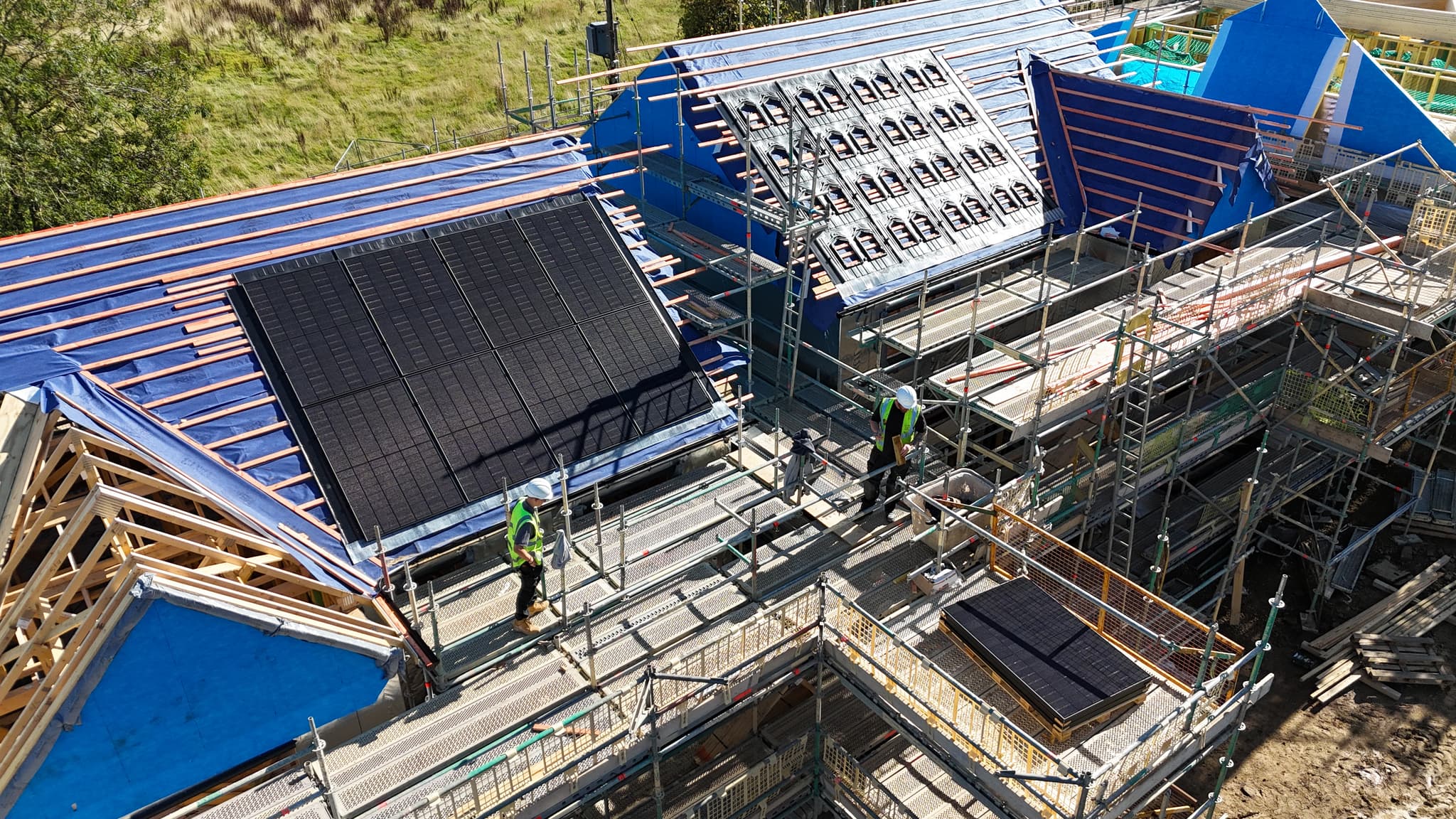
Saving costs and caring for the environment both matter, which is why all of our homes at Knowle Grange phase 2 come with solar panels fitted as standard. From the day you move in, you'll be generating your own electricity. Once they're installed, solar panels just work. No moving parts, minimal maintenance, just quietly generating electricity for 25 years or more.
At Vivly, we believe homes should tread lightly on the beautiful British landscape that surrounds them. But we also know that environmental benefits need to make practical sense for the people who'll actually live in these homes. That's why we focus on efficiency that genuinely reduces your running costs.
These features respect both the Yorkshire countryside our homes sit within and your need for a home that's affordable to run. We're not making grand claims about saving the planet. We're simply building homes that work more efficiently, cost less to run, and are ready for a future that's coming anyway. The efficient choice shouldn't feel like a sacrifice or a statement. It should just make sense. Lower fuel costs, reduced energy bills, and a home that's built to last in a changing world.
Pop into the Customer Experience Hub to learn more about how Vivly homes are designed for efficiency. Our team can talk you through the practical realities of EV charging, smart meters and solar panel readiness, and help you understand what these choices might mean for your household.
Recent Articles